El Jurista en el Nuevo Mundo
Sobre este libro
http://dx.doi.org/10.12946/gplh7http://www.epubli.de/shop/buch/54963"The present work addresses the history of Derecho Indiano (Spanish Colonial Law) and proposes to examine the role played by Indiano-Castilian jurists in the New World as creators and enforcers of a science and the practice of law. They were given the task of organising and developing public authorities as well as the new society, and in their engagement with the temporary institutions, they were confronted with realities and situations as diverse as they themselves proclaimed them to be. The works brought together in this volume originally appeared in journals and collected works from different countries, and they are now being presented here in a revised edition. Castile was the kingdom overseeing the expansion across the Atlantic; an expansion to lands and peoples unknown to Europeans up till that point in time. The jurists who worked under these new and challenging circumstances belonged to the Castilian tradition, and they were immersed in this tradition not only due to their university education, but also as a result of their cultural environment and the very structure of the governing bodies and justice system of the kingdom. The confrontation with a reality that was, in so many respects, different from that of the Peninsular – as could already clearly be seen in accounts written by conquistadors, missionaries and the authorities from the early days – encouraged jurists to search for solutions to the new problems that had arisen. Over the years, this led to the creation of what would eventually shape a heterogeneously composed normative corpus, both in civil and canon terms. The differences between the Indiano and Castilian systems were marked to the point that it became a widely accepted truth that the Indiano order could not be fully understood or taken into account either by the advisors of Castile or the lawyers who travelled to the Americas with no prior knowledge of this particular law. Jurists who were born or based in the Indiano provinces would often come to discover the “constitutional discourse” of the monarchy; in other words, they experienced the unfolding plot, so to speak, not through theory, but rather through the impetus provided by the possible solutions to the numerous issues that had arisen. Although Castilian legal literature, which exerted a powerful influence, was present and being circulated throughout the Americas, preferences when it came to specific authors and legal bodies were as different as the readings and interpretations made of them. Several criteria both general and specific in nature took shape. Consequently, “local contexts”, for example, were often discussed in the application of general norms and the “customary background” was similarly taken into account."
Cómo acceder a esta obra
Sigue descubriendo el libro y consulta las opciones para obtenerlo en formato digital.
Valoración
Más libros de la temática Derecho


Novedades Literarias

Japón ante la nueva configuración de Asia del Pacífico.
Juan José Ramírez Bonilla
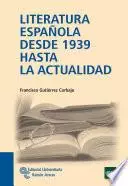
Literatura española desde 1939 hasta la actualidad
Francisco GutiÉrrez Carbajo

Introducción a la arquitectura contemporánea
José Luis Madia

Proyecto Anticristo
Miguel Pedrero Gomez