Pueblos
Sobre este libro
Pueblos is a complete Intermediate Spanish program that systematically presents culture within the context of the historical and political forces that have shaped and continue to shape the Spanish-speaking world. Grammar, vocabulary, and content are merged in a way that emphasizes communication, cultures, comparisons, connections and communities and a comprehensive historic-to-contemporary view of the Spanish-speaking populations and civilizations. The word pueblos refers to places, settlements, civilizations, and nations, but also to groups of people who speak Spanish. Pueblos focuses on how the world's Spanish-speaking cultures and civilizations came into being and developed throughout time. Content-based program supports students in using the target language to learn varied subject matter as they improve their language proficiency and linguistic accuracy. Complete cultural and historic context focuses on the development of the world's Spanish-speaking cultures and civilizations, linking past, present and future events in Spain, the Caribbean, Mexico, Central America, South America, the Philippines, and Equatorial Guinea. Authentic readings enable students to encounter targeted vocabulary and grammar in a content- rich framework of culture and history. Historical timelines provide a visual tool to help students sequence events and view historical information, enabling them to better understand the evolution of the Spanish-speaking world. Historical approach orients the learner along a chronological timeline provided at the beginning of each chapter and links past, present, and even future events to reflect the interconnected and organic way in which civilizations develop. Structured, culminating projects and task-based assignments ask students to synthesize and use vocabulary, grammar, culture, and exploration from a personal point of view.
Cómo acceder a esta obra
Sigue descubriendo el libro y consulta las opciones para obtenerlo en formato digital.
Valoración
Más libros de la temática Filología


Novedades Literarias

Remploi, citation, plagiat
Pierre Toubert

El túnel de Ernesto Sábato (Guía de lectura)
Resumenexpress,

Matemáticas re-creativas
Alan J. Bishop
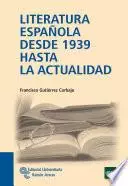
Literatura española desde 1939 hasta la actualidad
Francisco GutiÉrrez Carbajo